Parents today are looking for more than just a safe place for their children after school. They want an environment where learning continues, confidence grows, and curiosity is encouraged. A well-designed after-school program can provide all of this while supporting academic success and personal development.As academic expectations increase, many families are seeking additional support outside the classroom. Children often benefit from more time to practice, explore, and fully understand what they are learning during the school day.Understanding the benefits of after school programs can help families make informed decisions about how their children spend their time beyond the classroom. The right program can turn after school hours into a meaningful extension of learning and growth.
Academic Benefits of After School Programs
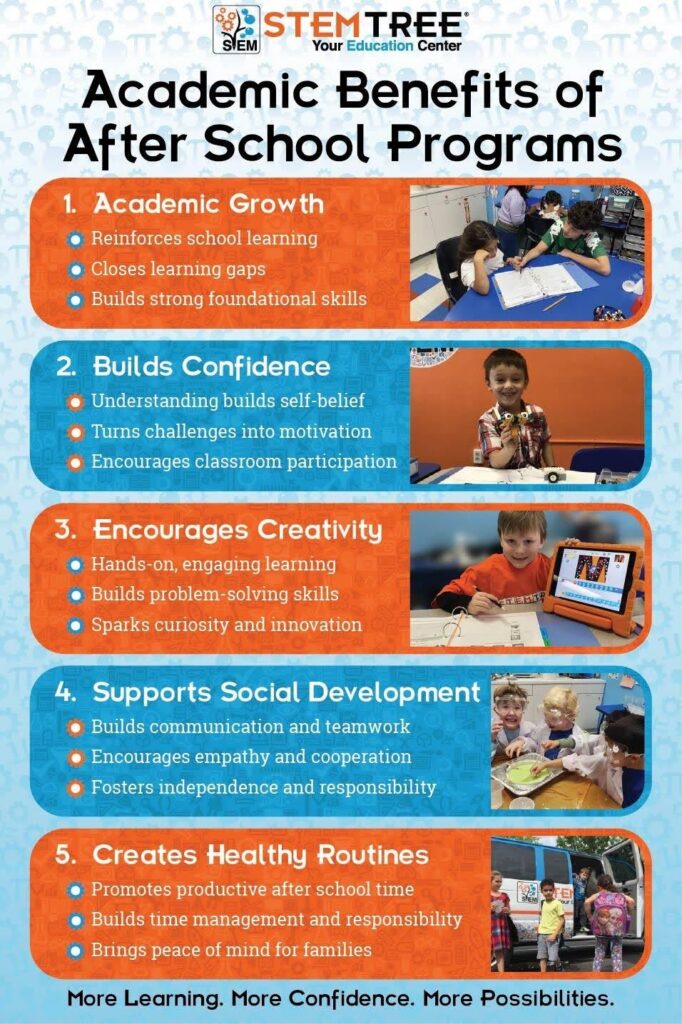
The traditional school day often moves quickly, with limited time for individualized attention. After school programs create opportunities for children to revisit concepts, explore new ideas, and strengthen foundational skills at a pace that works for them.This additional time allows students to close learning gaps and build a stronger academic foundation. Instead of feeling rushed or left behind, children can gain clarity and confidence through steady, supported progress.Programs that focus on subjects like science, math, coding, and engineering help children build critical thinking skills while reinforcing what they are already learning in school. This extended exposure supports a deeper understanding rather than surface-level memorization.
Building Confidence in Children
One of the most important benefits of a strong after-school program is the confidence it builds in children. When students are given the time and support to truly understand a concept, they begin to trust their abilities.Confidence grows when children experience success through effort and understanding. This helps shift their mindset from frustration to motivation, especially in subjects they may have previously found challenging.This sense of confidence often carries over into the classroom. Children become more willing to participate, ask questions, and take on challenges because they feel prepared and capable.
Encouraging Creative Learning
After school programs provide a more flexible and engaging environment than a traditional classroom setting. This allows children to explore topics in a hands-on way that sparks curiosity.When children are encouraged to experiment and solve problems creatively, they begin to develop independent thinking skills. This type of learning supports both academic growth and real-world application.Activities that involve experimentation, problem-solving, and creativity help children develop a genuine interest in learning. Instead of viewing education as a task, they begin to see it as something enjoyable and rewarding.
Supporting Social Development
Beyond academics, after school programs also. Children interact with peers in a collaborative setting, which helps them build communication skills, teamwork, and empathy.These interactions allow children to practice cooperation and learn how to navigate group settings. Over time, this helps them become more confident in social environments both inside and outside of school.These programs also create a supportive environment where children can develop independence and responsibility. Over time, this contributes to stronger self-esteem and a more positive attitude toward learning.
Creating Healthy Routines After School
A consistent after school routine can benefit both children and parents. Structured programs provide a productive way for children to spend their time, reducing the likelihood of disengagement or excessive screen use.Routines also help children develop time management skills and a sense of responsibility. Knowing what to expect each day can create a sense of stability and comfort.For families, this consistency brings peace of mind. Parents know their children are in a safe, enriching environment that supports both academic and personal growth.
Long-Term Benefits for Children
The skills developed in after school programs go far beyond immediate academic improvement. Critical thinking, problem-solving, and confidence are all essential for long-term success in school and in life.Children who regularly engage in structured learning outside of school are often better prepared to handle academic challenges as they grow. They develop resilience and a stronger ability to work through difficult concepts.When children are consistently exposed to engaging learning experiences, they are more likely to develop a lifelong love of learning. This mindset can influence their academic path, career interests, and overall personal development.
How to Choose the Best After School Programs
Not all after school programs offer the same level of value. Parents should look for programs that provide individualized learning experiences and a focus on true understanding.It is also important to consider the learning environment and teaching approach. Programs that balance structure with creativity tend to keep children more engaged and motivated.Parents should seek out programs that offer:
Individualized learning experiences
A focus on understanding rather than memorization
Engaging, hands-on activities
Supportive and knowledgeable instructors
A balance between structure and creativity
Programs that combine these elements tend to deliver stronger outcomes and a more meaningful experience for children.
A Thoughtful Approach to After School Learning
An effective after-school program should feel both educational and enjoyable. When children are engaged, supported, and challenged in the right ways, they are more likely to thrive academically and personally.A strong program focuses not just on results, but on the learning process itself. This helps children build skills that last far beyond a single school year.Stemtree’s after school programs are designed to build strong academic foundations through individualized, mastery-based learning in subjects like science, technology, engineering, and mathematics. By creating an environment where children can explore, understand, and grow with confidence, families gain a trusted partner in their child’s development.If you are considering an after-school program, choosing one that prioritizes both learning and engagement can make a meaningful difference in your child’s journey. Contact Stemtree today to learn more or to schedule a visit and see the program in action.
Key Takeaways
After school programs support academic growth and deeper understanding
Children gain confidence through mastery-based learning
Hands-on activities encourage creativity and curiosity
Programs build social skills and independence
Structured routines help children stay engaged and productive


 The traditional school day often moves quickly, with limited time for individualized attention. After school programs create opportunities for children to revisit concepts, explore new ideas, and strengthen foundational skills at a pace that works for them.
This additional time allows students to close learning gaps and build a stronger academic foundation. Instead of feeling rushed or left behind, children can gain clarity and confidence through steady, supported progress.
Programs that focus on subjects like science, math, coding, and engineering help children build critical thinking skills while reinforcing what they are already learning in school. This extended exposure supports a deeper understanding rather than surface-level memorization.
The traditional school day often moves quickly, with limited time for individualized attention. After school programs create opportunities for children to revisit concepts, explore new ideas, and strengthen foundational skills at a pace that works for them.
This additional time allows students to close learning gaps and build a stronger academic foundation. Instead of feeling rushed or left behind, children can gain clarity and confidence through steady, supported progress.
Programs that focus on subjects like science, math, coding, and engineering help children build critical thinking skills while reinforcing what they are already learning in school. This extended exposure supports a deeper understanding rather than surface-level memorization.
Sorry, the comment form is closed at this time.