Parents want their children to do more than memorize information for the next test. They want learning experiences that build confidence, encourage curiosity, strengthen problem-solving skills, and help children understand how what they learn connects to the world around them.That is one reason personalized STEM learning can be so valuable for families.Instead of expecting every student to learn the same material at exactly the same pace, personalized learning considers a child’s current knowledge, abilities, and learning needs. When combined with hands-on science, technology, engineering, and mathematics activities, this approach can make STEM subjects more accessible and engaging for students.For education franchise owners, this also highlights an important consideration. Families are not simply looking for somewhere for their children to spend time after school. They are looking for programs that provide meaningful educational value and respond to their child as an individual.
What Is Personalized STEM Learning?
Personalized STEM learning adapts instruction to the needs and progress of an individual student. A child who already understands a particular math concept, for example, may be ready for a greater challenge. Another student may benefit from spending additional time building foundational skills before moving forward.Rather than placing both students on an identical path, a personalized approach allows instruction to better match where each learner currently stands.This can be especially useful in STEM education because subjects such as math, coding, science, robotics, and engineering often build on previously learned concepts. Giving students opportunities to develop a strong foundation can make more advanced topics easier to approach later.
Why Families Value Learning That Meets Children Where They Are
Children do not all arrive at an educational program with the same strengths, interests, or experience. Some students may already feel comfortable solving math problems but have never experimented with coding. Others may enjoy building things but need additional academic support in science or mathematics.A personalized learning environment recognizes those differences. Instead of making the child fit a predetermined lesson sequence, instruction can respond to the student’s current skill level and learning needs.For parents, that can make an educational program feel more purposeful. Their child is not simply completing an activity because every other student is doing it. The learning experience has a clearer relationship to what that child needs to work on next.
Personalized Learning Can Help Keep Students Appropriately Challenged
One challenge in group learning environments is finding a level of difficulty that works well for every student. Material that moves too quickly can become frustrating. Material that is too easy may leave a student disengaged.Personalized STEM learning creates opportunities to find a more appropriate balance. When instructors understand what a student already knows, they can provide activities and concepts that encourage progress without unnecessarily repeating material the child has already mastered.For families evaluating an enrichment or tutoring program, that level of individual attention can be an important distinction.
Hands-On Learning Makes STEM More Tangible
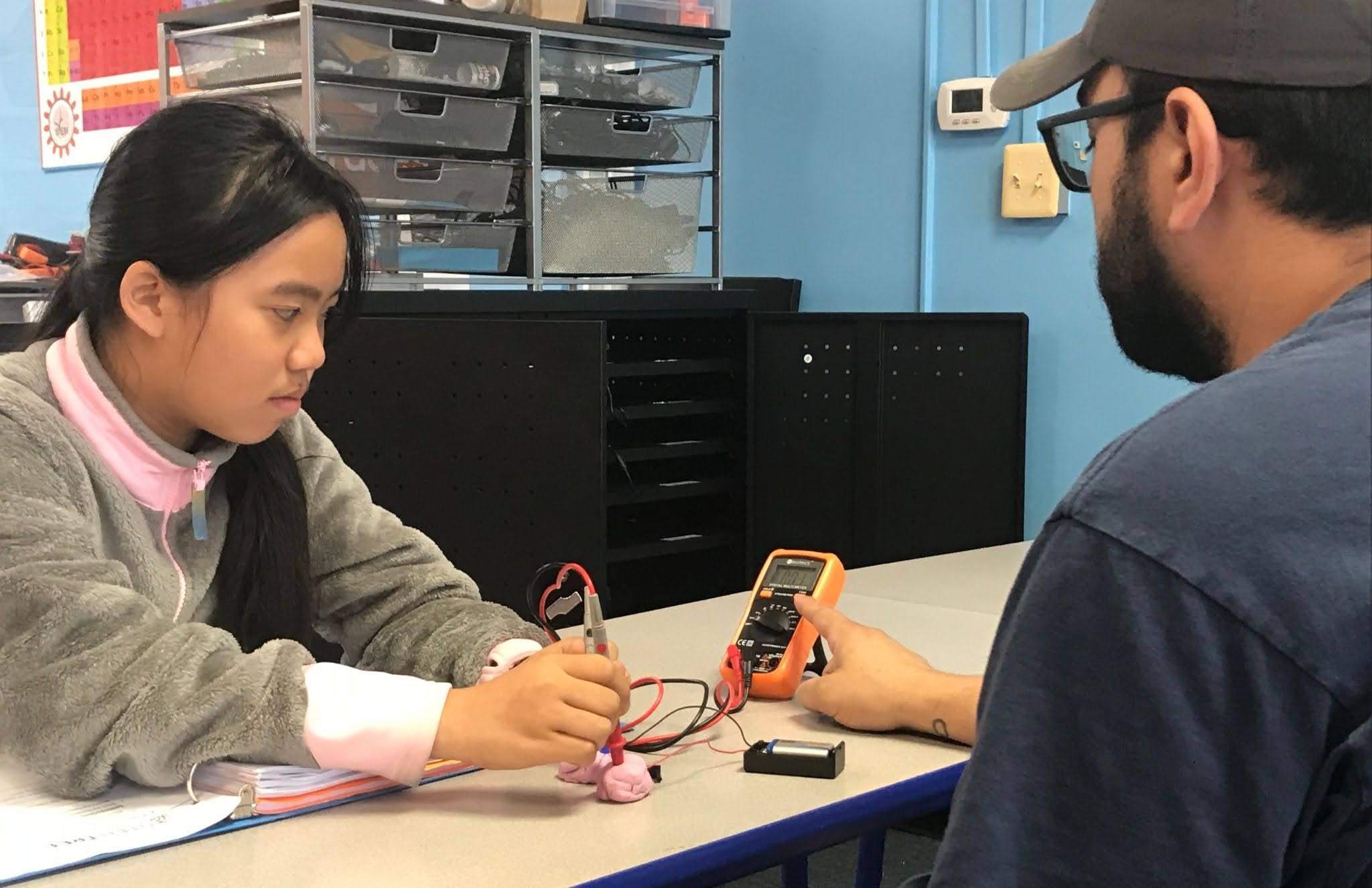
Personalization is particularly powerful when students can actively apply what they are learning. STEM naturally lends itself to experimentation and problem-solving. Instead of only reading about a scientific concept, students can investigate it. Rather than simply learning what a robot does, they can build and program one. Instead of memorizing a mathematical idea without context, they can apply it during an activity.Hands-on experiences give students opportunities to ask questions, test ideas, make adjustments, and observe results. For parents, this means STEM education can become something their children experience rather than something they only study.
It Gives Different Types of Learners Room to Progress
A personalized environment can also accommodate children who participate in STEM education for very different reasons. One student may need help strengthening a classroom skill. Another may already perform well academically but want opportunities to explore robotics or coding beyond what is available at school.Both can benefit from STEM education, but they may not benefit from exactly the same program. This is why educational programs that combine academic support with enrichment can appeal to a wider variety of families.The takeaway is simple: families have different goals, and strong learning programs should be able to respond to those differences.
Personalized STEM Learning Can Encourage Confidence
Confidence often grows when students have opportunities to understand a concept, practice it, and experience progress. In STEM subjects, students may encounter problems that do not have an immediately obvious answer. Learning how to work through those challenges is part of the educational experience.A personalized setting can give students room to practice without feeling that they must keep pace with an entire classroom. That focus matters because the goal of STEM education is not simply to produce a correct answer. It is also to help students become more comfortable thinking through problems, testing ideas, and continuing when a challenge requires additional effort.
Parents Are Looking for More Meaningful After-School Experiences
After-school programs serve an important practical role for families, but parents may also want those hours to contribute positively to their child’s development. Educational enrichment can turn part of that time into an opportunity for children to discover interests, reinforce academic knowledge, or explore subjects they may not have enough time to investigate during the school day.STEM programs can be especially suited to that role because they can combine structured learning with creative exploration.For prospective education franchise owners, understanding what parents value is essential. The quality of the experience an education franchise provides can play an important role in how families perceive its value.A recognizable name or business system may help an owner get started, but families still need a compelling reason to enroll and continue bringing their children back. A thoughtful, personalized learning experience can be part of that reason.
Why Personalization Matters When Evaluating an Education Franchise
For someone considering an education franchise, the curriculum deserves careful attention.It is worth asking:
Does the program assess where students are starting?
Can instruction adapt to different skill levels?
Are students able to progress at an appropriate pace?
Does the curriculum include hands-on experiences?
Can the program serve children who need academic support as well as those seeking enrichment?
Does the learning experience offer clear value to parents?
These questions move the franchise decision beyond business operations alone.An education franchise is ultimately serving children. A strong concept should therefore give franchise owners the tools to create an environment that parents can trust and students can benefit from.
Bringing Personalized STEM Education to More Communities
For entrepreneurs interested in education, a STEM franchise can provide an opportunity to build a local business around a service that supports children and families.Stemtree combines personalized, one-on-one instruction with hands-on K-12 programs in science, coding, robotics, electricity and electronics, and mathematics. Its franchise model also includes training and ongoing support in areas such as curriculum delivery, operations, marketing, staffing, and business management.If you are exploring the possibility of opening an education franchise in your community, learn more about the Stemtree franchise opportunity and how its personalized STEM learning approach is designed to support students and families.
Key Takeaways
Personalized STEM learning allows instruction to respond to a student’s knowledge, abilities, and pace.
Individualized learning can help students receive an appropriate level of support and challenge.
Hands-on STEM activities give children opportunities to apply concepts through experimentation and problem-solving.
Personalized programs can serve children seeking both academic support and additional enrichment.
Families may place greater value on after-school programs that provide meaningful learning experiences rather than one-size-fits-all activities.
For prospective franchise owners, the quality and adaptability of the student experience should be an important part of evaluating an education franchise.

Sorry, the comment form is closed at this time.